Modern Huairen Ceramics: Industry, Specialty Town, Ecommerce
From state plants and institutes to private clusters, a provincial specialty town, export bases and ecommerce e-towns — Huairen’s modern northern tableware structure.
Industrial start after 1949
Wujiayao Porcelain Factory (1949) is publicly framed as a modern continuation of the kiln lineage; Yanbei Porcelain Plant (1957) rose for export earnings; local plants and a research institute followed in 1974–75. Black-glaze gilt cups enter ceramic-history narratives; events such as Asian Games stoneware supply mark outward recognition.
Private clusters and escaping sameness
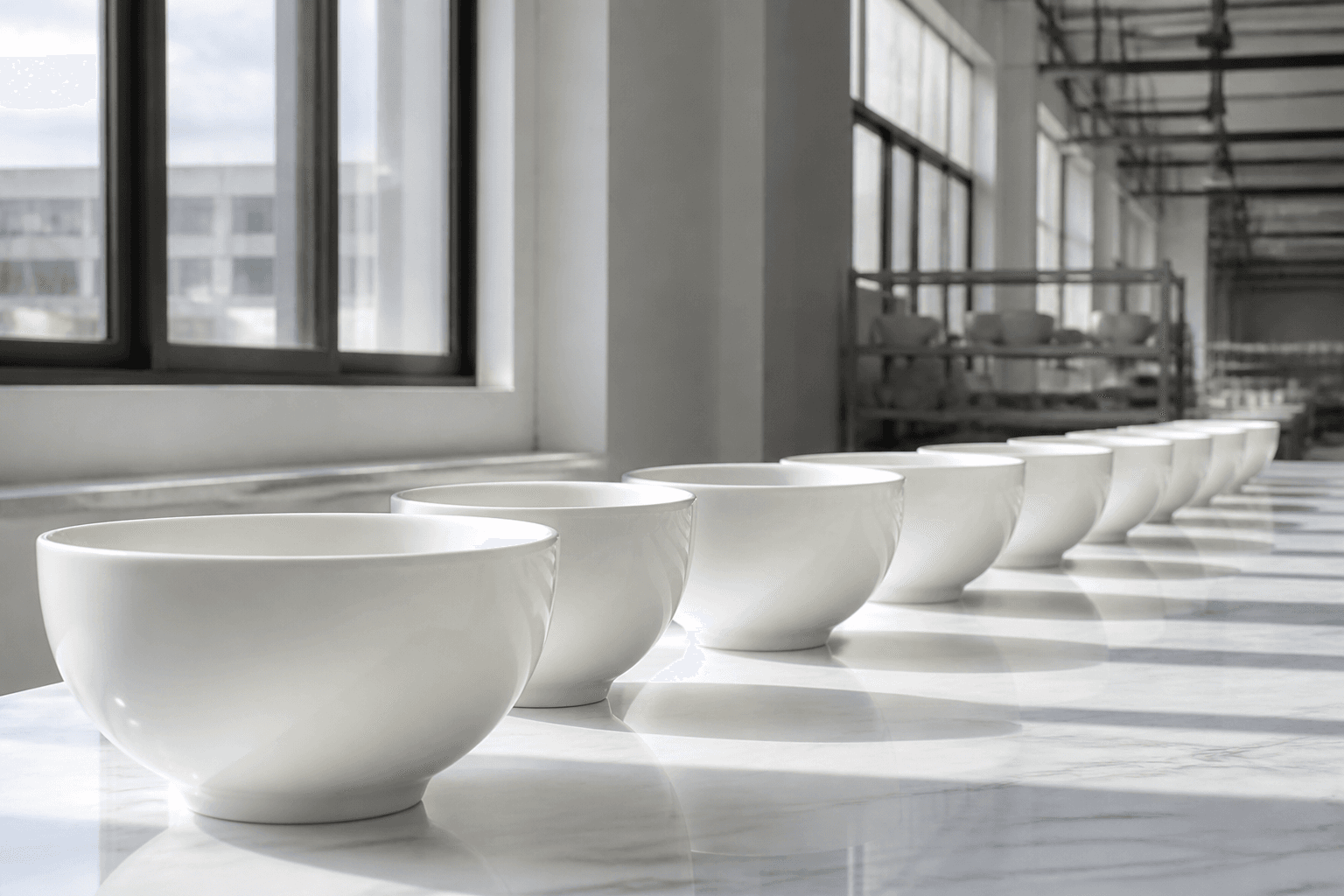
Private kilns rose from the 1990s with parks such as Jinshatan. Public reporting notes huge white-bowl volume but thin margins, pushing automation, colored-glaze/irregular forms and supplier specialization. Specialty-town policy then prioritizes smart upgrades, standards and regional branding toward a 10-billion-RMB cluster goal.
Bone china, export, ecommerce halls
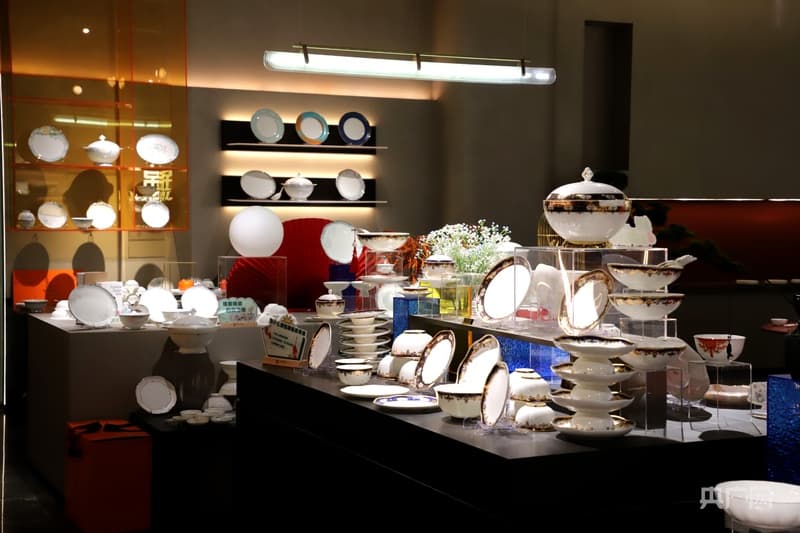
Recent public data highlights bone china’s ecommerce rise; Tmall/JD halls for Huairen ceramics; live commerce via the ceramics e-town. Export has long taken roughly half of output in reported geographies. This site presents regional selections with smart inquiry routing on the roadmap.
Xinhua Index: Huairen dailyware ecommerce notes ↗
Video feature: kilns renewed
Timeline
- 1949–1975State plants and research institutes launch industrial dailyware.
- 1990s–2010sPrivate clusters and parks expand; export and domestic channels run together.
- 2018+Export upgrade base, GI and specialty-town policy stack.
- NowBone china and ecommerce gifts grow; automation and standards continue.